03
Robinhood Chain Indexer
A self-hosted indexer that turns raw blockchain data into clean, queryable tables. It is the backbone of everything I run on Robinhood Chain.
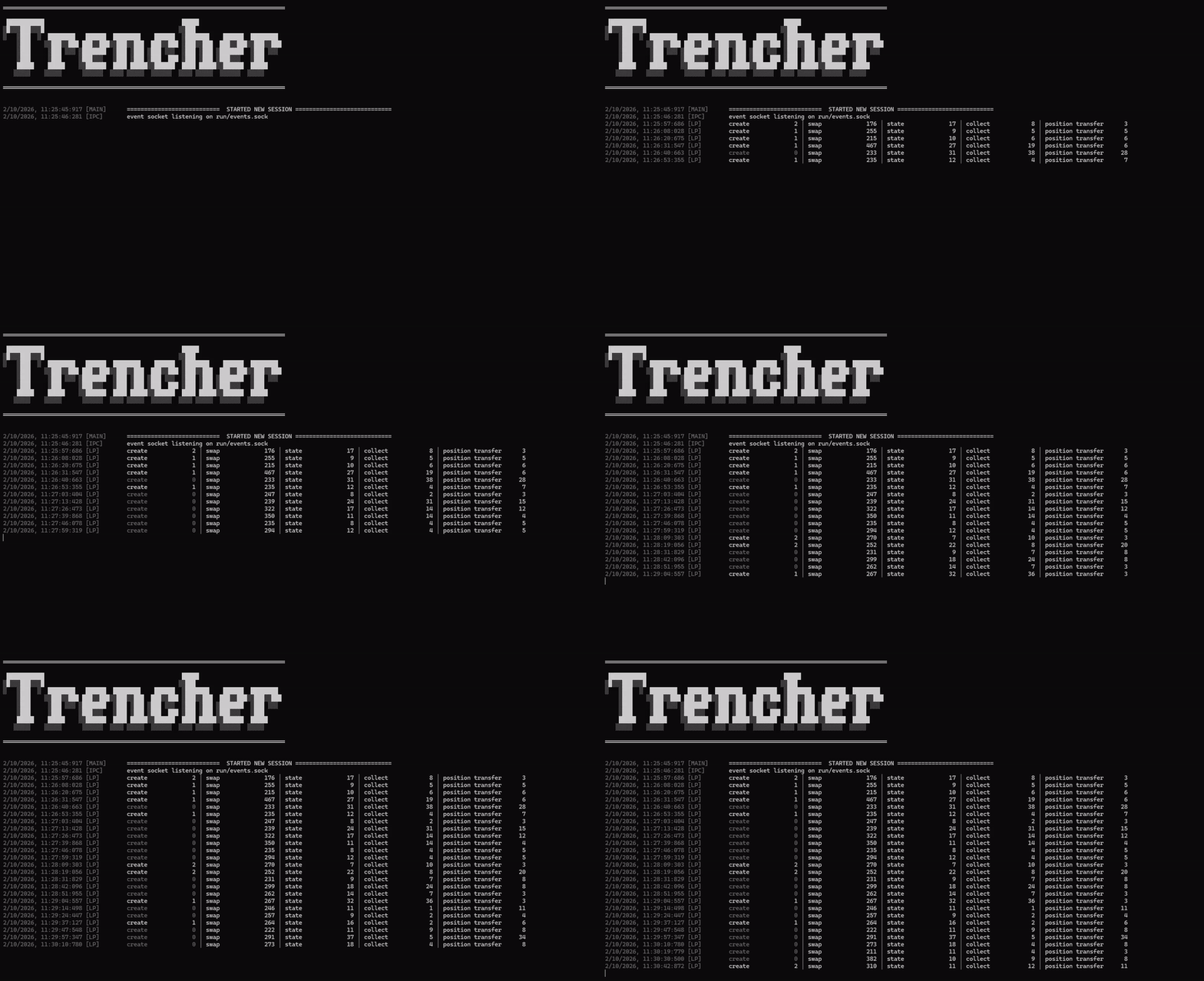
HOW IT WORKS
Fetches blocks and events via viem from providers like Alchemy. Polls the chain head. Recent data lives in PostgreSQL, older data in Parquet. Runs in Docker.
The problem
The Graph does not run on Robinhood Chain, so there was no ready-made way to find out where trading happens. I started small and indexed the chain for pool creations to discover trading venues. That grew into a full data indexer. Today it is the backbone of everything I run on Robinhood Chain: the trading bot, a limit order application and automated liquidity strategies.
Architecture
The indexer follows the free sequencer feed and uses it as the chain head. On an interval it calls eth_getLogs for the range from the last indexed block up to the sequencer head minus a few lag blocks. The poll interval is adjustable, in seconds or in blocks, so each deployment can pick its own balance of freshness and cost. Recent data lives in PostgreSQL and older data moves to Parquet. This keeps the live system small and fast, and no query has to dig through gigabytes of history. Everything runs in Docker.
Hard parts
The hardest part was staying inside RPC rate limits and keeping costs flat without losing data I needed. One batched log request per interval replaces thousands of single calls. A 10-second poll indexes the full chain for about $8 a month, and a 1-second poll costs about $80. The applications that connect decide which speed they need. Backfilling was the second hard part. Pools are discovered through their swaps, so a pool can show up that was never indexed. For those the indexer needs the creator, the creation block and the nonce. It finds them with a binary search over the chain history until it lands on the exact block and transaction.
Outcome
The indexer is still running and indexes the full chain: 10 blocks per second, 15M+ events per day, and about 70 GB of new data per week, of which roughly two fifths are database indexes. Every other system I built on Robinhood Chain reads from it. It shows that a complete, production-grade data pipeline does not need a big infrastructure budget.